
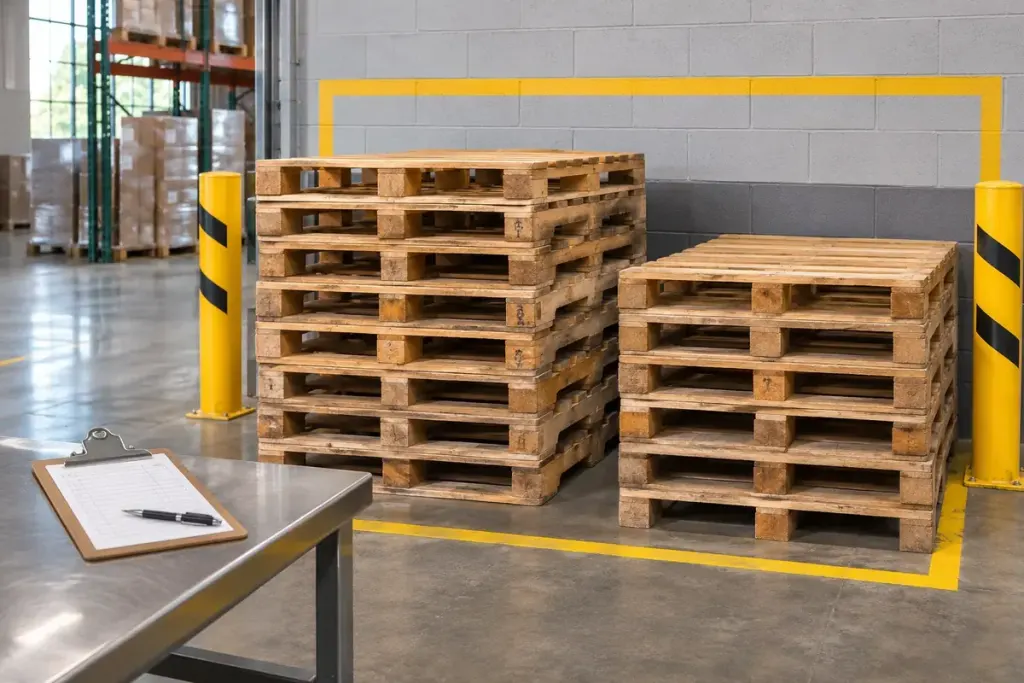
The delivery is checked, the cartons are unpacked and the order looks complete. Several empty pallets remain beside the warehouse wall. Before someone reuses or discards them, one question needs an answer: do they belong to the buyer?
A pallet can be sold with the goods, loaned, exchanged or handled under another arrangement. The delivery’s appearance does not tell you which applies. Read the agreed terms and ask the supplier when ownership or return responsibilities are unclear.
Give packaging its own line in the handover
For a practical receiving record, separate the goods quantity from the reusable packaging quantity. Record the pallet type or identifier when relevant, its stated owner, the condition noted at receipt and the document that explains the return arrangement.
Consider a fictional delivery of twelve reusable pallets. Eight are collected a week later, while four remain under stock still being used. A goods-received note showing the product order as complete does not explain that remaining packaging balance. A separate record can show twelve received, eight returned and four outstanding.
Those numbers describe a tracking example, not a universal deposit or ownership system. Use the terms that actually govern the transaction.
Agree what a completed return looks like
Before the first collection, clarify who books it, where empties should wait, what condition is acceptable and what evidence the receiver will provide. If a deposit or handling charge applies, identify the document that shows how it is reconciled.
A driver’s arrival is not the same as confirmation that every expected pallet was collected. Count what leaves and keep the collection reference. Where the supplier uses an account statement, reconcile it with your own record rather than assuming both sides counted the same way.
Store empties only in the site’s approved area and follow its handling rules. Do not create a temporary stack in an exit route while waiting for someone to decide who owns it. Avoid transferring pallets to another supplier’s collection merely because they look interchangeable.
At a staff handover, leave an outstanding-packaging list alongside the open-order list. Name the person following up each unresolved return. This makes a small operational detail visible before it grows into lost assets, an unexplained charge or a warehouse corner nobody feels responsible for clearing.