
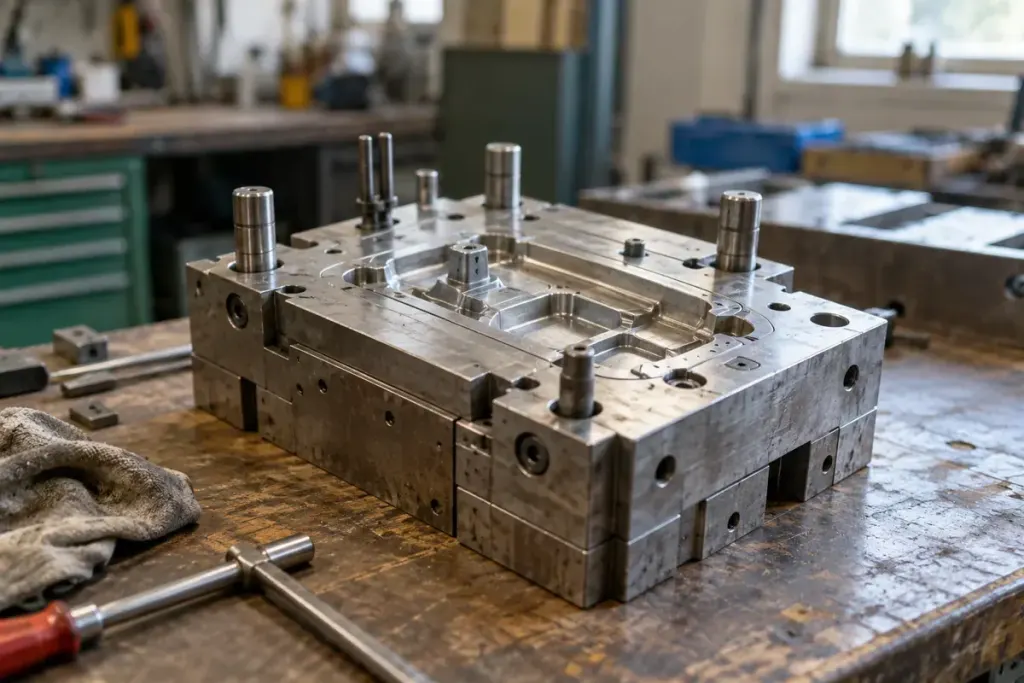
A quote includes a one-time mould or tooling charge. Paying that line does not, by itself, answer every question about who owns the tool, who may use it or what happens when the supply relationship ends.
Turn the charge into specific questions
- What physical tool or preparation does the charge cover, and how will it be identified?
- Is the tool dedicated to your product or shared?
- Where will it be stored, and who maintains it?
- How will wear or replacement be handled?
Keep the answers linked to the quotation revision rather than scattered across informal messages.
Separate ownership from access. Even where an agreement establishes ownership, practical transfer may involve transport, documentation, compatibility and agreed conditions. Do not assume that a tool designed for one supplier’s process will work unchanged at another factory.
Review the exit before the first order
For an invented example, a buyer approves a mould for a small enclosure. Before paying, the buyer requests a tool identifier, an acceptance sample process and a written explanation of transfer arrangements. Those questions make the purchase more reviewable without pretending that one standard clause suits every country or contract.
Have commercially significant terms reviewed by the appropriate procurement or legal adviser. This checklist does not establish ownership rights; the actual agreement and applicable law matter. Its purpose is to expose missing decisions while both parties can still clarify them, rather than discovering after a disagreement that “setup included” meant different things to each side.
AI-generated editorial illustration; not a documentary photograph.